
Chiari Malformation
What Is It?
A Chiari malformation is a structural defect in the brain in which the lower part of the cerebellum extends into the spinal canal. This abnormal positioning can disrupt the flow of cerebrospinal fluid and put pressure on the brain and spinal cord. The condition may be present at birth or develop over time, and its severity varies.
What Are The Symptoms?
Symptoms of Chiari malformation vary. Some people remain asymptomatic, while others experience neurological complications depending on the degree of herniation. Common signs include headaches, often worsened by coughing or straining, neck pain, balance problems, dizziness, and rarely muscle weakness. Some people experience numbness or tingling in the hands or feet, difficulty swallowing, vision or hearing problems, and coordination challenges. Symptoms may appear in childhood or adulthood, and their intensity can range from mild to disabling, depending on how much the cerebellum extends into the spinal canal.
What Are The Treatement Options?
Treatment for Chiari malformation depends on symptom severity and the degree of cerebellar herniation. Mild or asymptomatic cases may only require regular monitoring with imaging and neurologic exams. Symptomatic or severe cases often require surgery to relieve pressure on the brain and spinal cord, restore cerebrospinal fluid flow, and prevent further neurological damage. Additional treatments may include pain management, physical therapy, or medications to address specific symptoms.
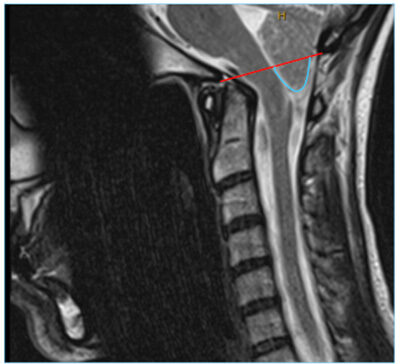
MRI of Chiari Malformation. The blue line shows the lower
portion of the cerebellum, which should be above the red line